A couple of weeks ago, I got to visit my brand-new nephew in the hospital. At just over a day old, he was undergoing some very important health checkups to ensure he would have the best start in life and to inform his parents of any follow-up needs after leaving the hospital. A few minutes after I arrived, a technician came in to test his hearing. It was a fascinating, completely non-invasive test that could potentially have a huge impact on my nephew’s immediate learning development.
Each year, more than 6,000 infants in the U.S. are identified with permanent hearing loss (CDC). This represents roughly 1–2 per 1,000 newborns screened (CDC). Without early identification of hearing loss, a child’s ability to develop speech, language, and social skills can be significantly impacted. Because of this, all 50 states and D.C. have screening programs, and more than 98% of U.S. newborns have their hearing screened.
Universal screening enables a widely recognized timeline known as “1-3-6”:
This early window is critical. When hearing loss is identified and addressed promptly, children are far more likely to develop communication skills equivalent to their peers.
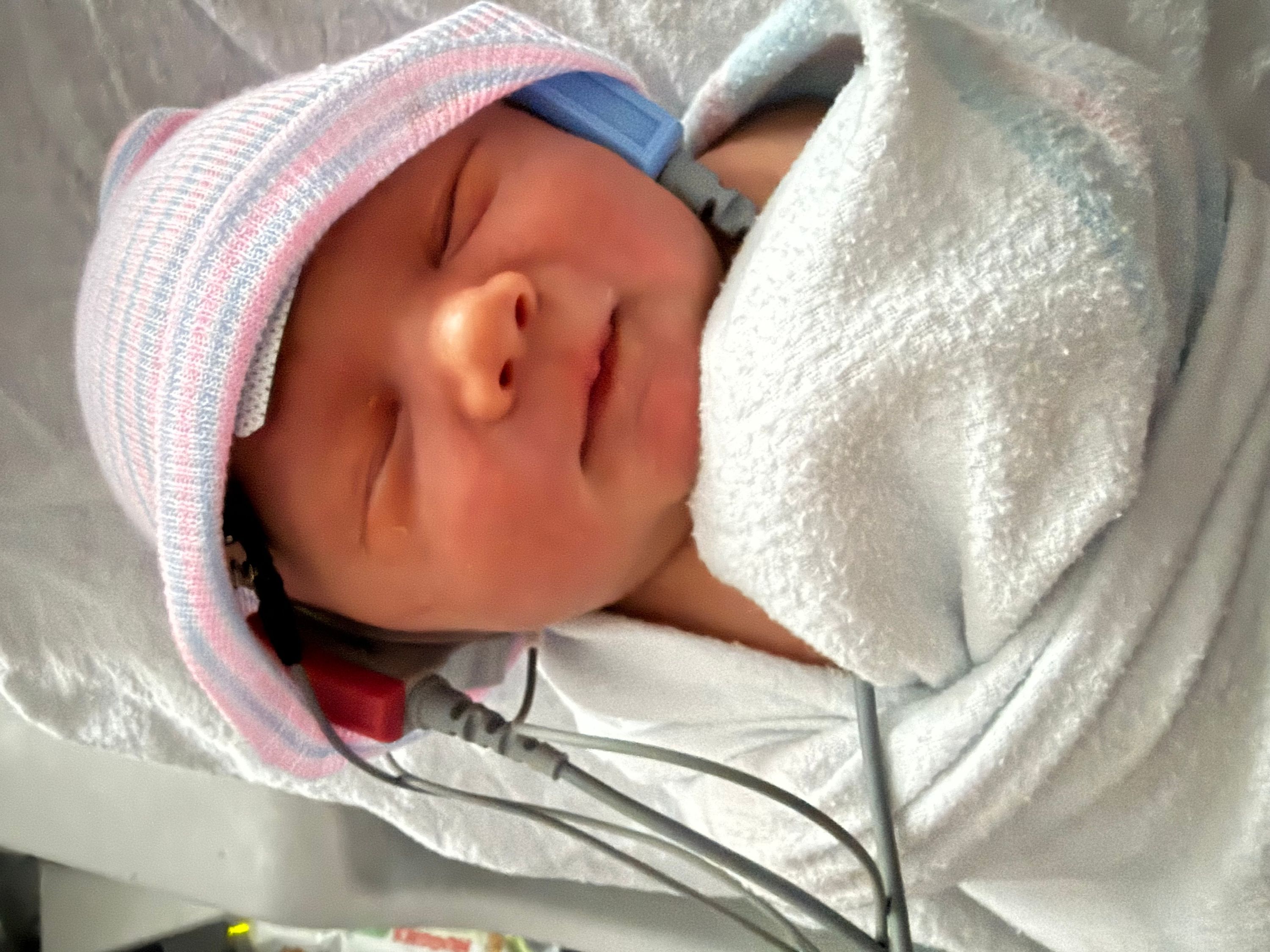 How Does Newborn Hearing Screening Work?
Newborn hearing screening is quick, safe, and noninvasive, typically best performed while a baby is asleep. In my nephew’s case, he was vocally done with being handed around, so the hearing tech cuddled with him until he fell asleep and could allow for more accurate results.
Two common methods are used to screen newborn hearing:
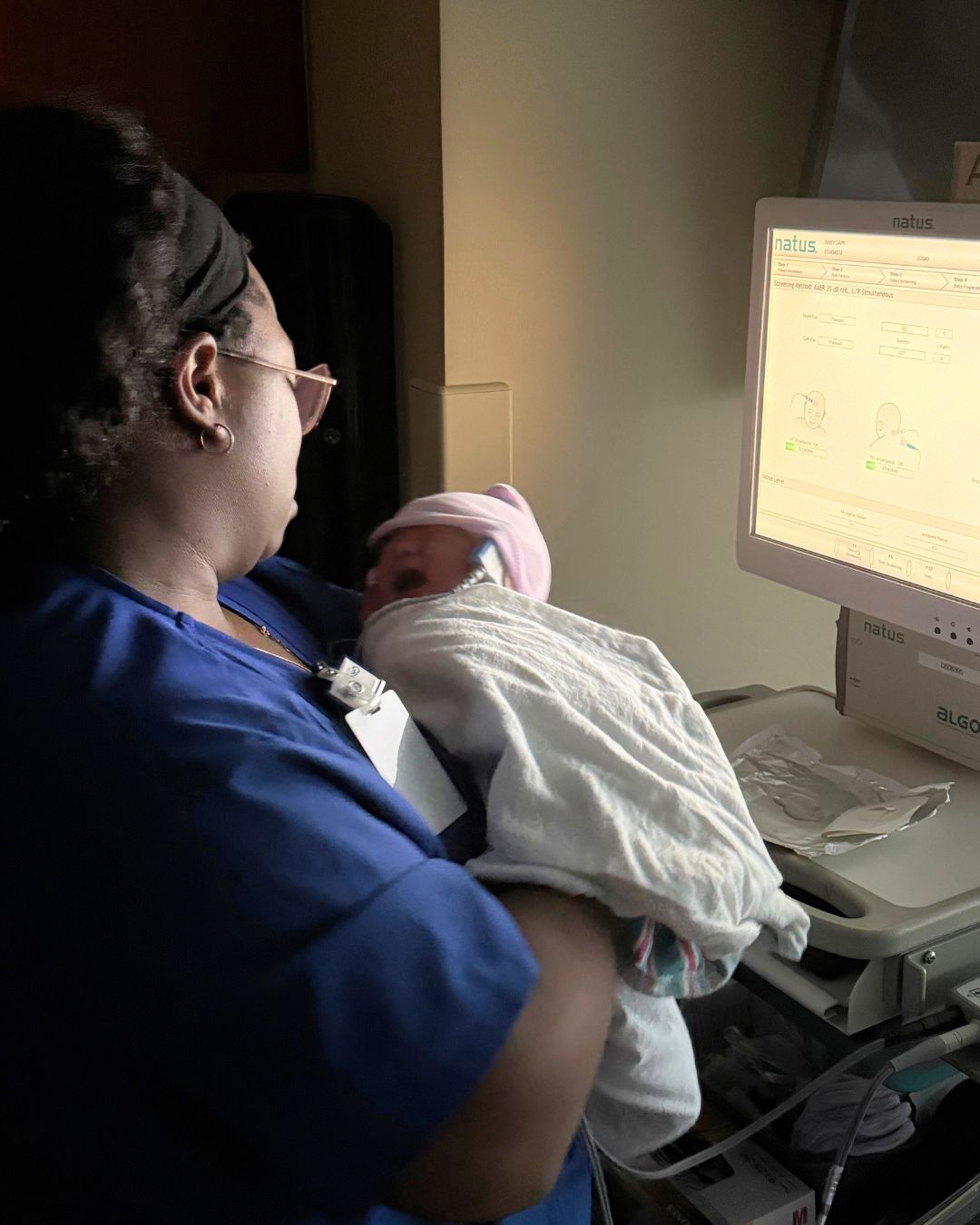 As the technician explained to me, a baby not passing the initial screening does not necessarily mean hearing loss. Fluid in the ear or movement during the test can affect results. If he were not to pass, she would return the next day and test again. If a second test is failed, the child is referred for further hearing testing. Luckily, he passed the first time!
If the screening showed hearing loss, I knew that my nephew would still have every chance to thrive with today’s technology and resources. As I’ve learned from my work in the hearing industry and from experience with family friends who have children with hearing loss, young children can greatly benefit from:
Combined with early detection, these innovations have dramatically improved outcomes. Children who are identified early and receive appropriate support can thrive academically, socially, and emotionally.
Universal newborn hearing screening represents a powerful example of what early detection can achieve. By identifying hearing loss within the first days of life, we give children access to the tools and support they need to develop language, connect with others, and reach their full potential. If you have or know of a child with hearing loss, check out these educational resources within our For Kids section!

The Hearing Industries Association is the trusted voice on hearing health care for product innovation, public policy, patient safety and education.


