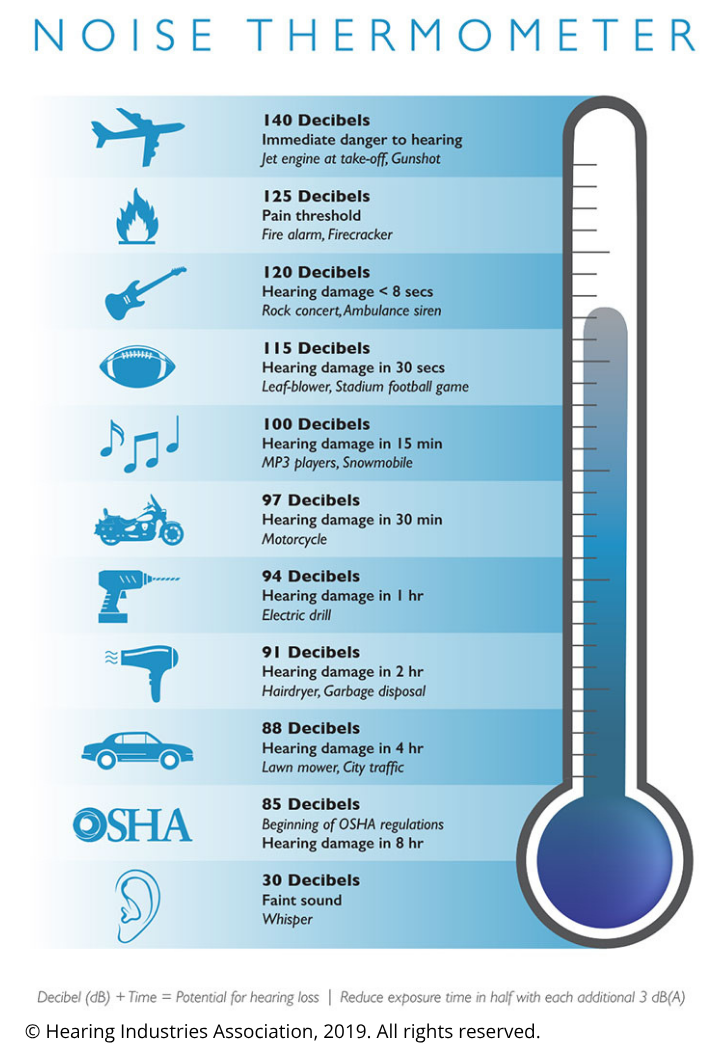
 During Fourth of July events, we are exposed to blasts from fireworks that sometimes last well into the night. Even though each blast may be brief, fireworks are capable of producing louder sounds than that of a rock concert, ranging between 125-155 decibels (dB). Any noise above 85 dB can cause damage, so close exposure to fireworks can cause hearing loss almost immediately.
We hear sound when delicate hair cells in our inner ear vibrate, creating nerve signals that the brain understands as sound. But just as we can overload an electrical circuit, we also can overload these vibrating hair cells. Loud noise damages these delicate hair cells resulting in hearing loss and often tinnitus (constant ringing, buzzing, or whooshing sound in the ears). The cells that are the first to be damaged or die are those that vibrate most quickly—those that allow us to hear higher-frequency sounds clearly, like the sounds of birds singing and children speaking. Remember, hearing loss is permanent, but noise-induced hearing loss is 100% preventable.
First, it’s best to leave the fireworks to the professionals while keeping a comfortable distance to enjoy the colors and lights. Always bring disposable earplugs to wear throughout the event and encourage those around you to do so too. Earplugs must fit snuggly to adequately block excessive noise, so carefully read the instructions on the earplug packaging to ensure an appropriate fit. Earplugs are an inexpensive and easy way to protect fragile areas in our inner ear in any loud environment or event.
If you are exposed to hazardous noise this holiday and are worried about your hearing health, take note of the warning signs of hearing loss:
Luckily, there are ways to check your hearing online and find a licensed hearing care professional near you to consult about your hearing and conduct a comprehensive hearing test.

The Hearing Industries Association is the trusted voice on hearing health care for product innovation, public policy, patient safety and education.


