Congratulations! You’re ready to act on your hearing loss. Not only can treating your hearing loss reduce your risk of depression, social isolation, and higher healthcare costs, but over eight in 10 hearing aid wearers report satisfaction with their devices. One reason for these high satisfaction rates is due to hearing aids being available in various styles, technology, and colors that can fit nearly any user’s style listening needs and comfort preferences. So, what options do you have and how do you find the best fit?
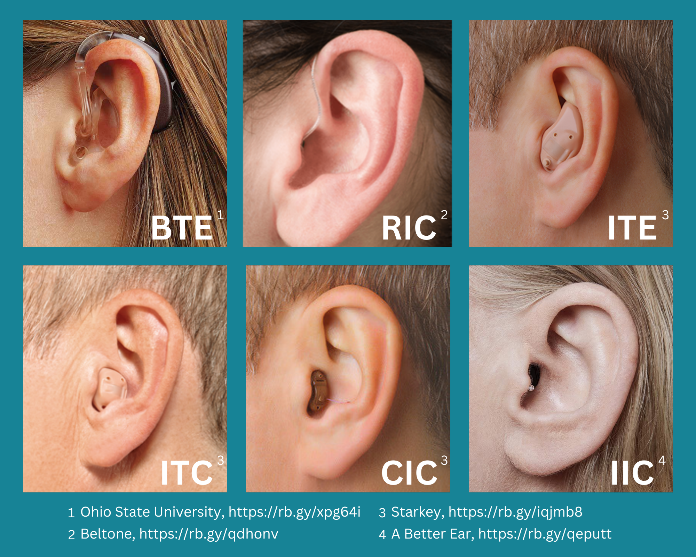 The first and most important step in selecting a hearing aid is to have a consultation and hearing assessment by a licensed hearing care professional. The results of your hearing test will help determine the extent and nature of your unique hearing loss.
The licensed hearing care professional will consult with you about your degree of hearing loss, lifestyle, and personal preferences. There are different types of hearing aids available, each designed to address specific types of hearing loss and comfort preferences. Common types include:
If you have severe or profound hearing loss that has not benefited from the use of a hearing aid, a hearing care professional may recommend a cochlear implant. Cochlear implants are surgically implanted medical devices that take the place of the function of a damaged inner ear (cochlea).
Hearing aid technology is now equipped with advanced features that enhance your ability to hear and communicate. Some features that you may want in your new hearing aids are:
 Evaluate which features align with your specific desires and in which situations listening is most challenging for you. A licensed hearing care professional can provide options that are equipped with the most beneficial features for your daily life.
Hearing aids come with varying price points depending on their level of technology and any other professional services bundled with the price of the technology. You can discuss the many options available with your hearing care professional so they can offer choices that would fit your personal needs and requirements.
Choosing the right hearing aid is a personalized journey that is most successful when involving a licensed hearing care professional. Don't hesitate to explore the possibilities and embark on the path to better communication.
Take a few minutes to screen your hearing online
Reach out to a local hearing professional for a consultation

The Hearing Industries Association is the trusted voice on hearing health care for product innovation, public policy, patient safety and education.


